John Lee Hooker: Boom Boom
A rare live recording of an intimate show featuring the legendary Coast to Coast Blues Band

John Lee Hooker: Boom Boom · Aggrovox
Press play on AggrovoxThe original post on Substack, with the full audio playerIt’s a warm Friday night, September 14, 1984, inside Casa de la Raza, Santa Barbara’s Chicano Community Center on the city’s industrial lower Eastside. The audience is packed into the 2000 square foot main hall of the converted two-story cement factory warehouse. During the day the space is filled with students studying after school at cafeteria tables, or there might be a community meeting in progress.
At one end of the darkened hall the small stage is pressed up against the far wall of the 90 x 25’ room. The makeshift stage raises the performers about two feet above the concrete floor, an elevation that sees the band standing roughly solar plexus level above the 300+ heads in the crowd. Sight lines are terrible, if not non-existent. Halfway back in the hall and shoved tight against the side wall the sound board is a small U-shape collection of 8’ cafeteria tables covered with black tablecloths. A few small permanent light fixtures hang above and in front of the stage and these are augmented by two temporary lighting towers tucked behind the crowd-facing PA speakers.
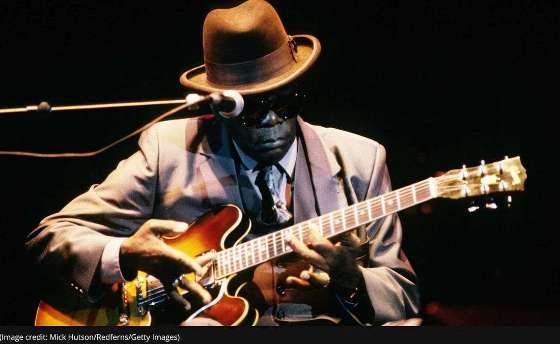
John Lee Hooker, (August 22, 1912 or 1917 – June 21, 2001) grows up with the strong musical influences of his stepfather, William Moore, a working Mississippi Delta Blues guitar player. In interviews Hooker often repeats that he and his father are the only two musicians with their unique style. A young John Lee performs as a solo act at house parties while still a teenager. By the 1930’s he’s making small barrooms jump on Beale Street in Memphis, stomping out songs with his left foot and just a guitar. By the 1950s he’s in Detroit and playing fully electric while often appearing with a supporting four- or five-piece band.
In the 1960s Hooker plays hundreds of shows every year, including dozens of festival dates in Europe. It’s impossible to overstate how important these overseas appearances will become to both rock and roll in general and to Hooker’s career. In 1962 he headlines the American Folk Blues Festival which includes stops in Manchester, England where member of the Rolling Stones – formed just months earlier - attend, and in London Eric Clapton and Stevie Winwood are in the crowd. In subsequent years the British rockers who first experience Hooker at the festival acknowledge his inspiration and many will go on to collaborate with him.
Musically the Casa de la Raza show feels like peak John Lee Hooker. He starts the 1980’s by appearing in the #1 movie in America, The Blues Brothers, playing a fictional version of himself – Street Slim. By the mid-eighties the music industry seems to have forgotten him and once again he’s playing small clubs for a few hundred people. In 1989 Hooker releases The Healer – his collaborative album that wins two Grammy Awards and cements a triumphant return to commercial success.
The Healer reintroduces John Lee Hooker to yet another generation of fans and is part of one of the most remarkable comeback stories in music. When Hooker plays Casa de la Raza in the mid-eighties he has no recording contract, and seemingly is remembered only by die-hard Blues fans. Hooker’s manager, Mike Kappus, and Hooker’s slide guitar accompanist Roy Rogers imagine a collborative album to pay homage to Hooker’s influence on generations of musicians. Carlos Santana is a long-time Hooker devotee, and it’s his support that finally makes the album commercially viable.
The Coast To Coast Blues Band
The four piece band behind Hooker at Casa de la Raza in 1984 – The Coast To Coast Blues Band - isn’t the same lineup on The Healer. For the album the producers opt for ‘superstars’, eschewing even Hooker’s longtime band leader, Deacon Jones in favor of Chester Thompson - famous for his collaborations with Santana, and his for his work with Tower of Power in Oakland, California. The resulting ‘studio’ sound of The Healer is very different from the ‘small unit’ sound that tears up the Casa in September.
For over 18 years Melvyn “Deacon” Jones (Organ, Vocals) is Hooker’s band leader and collaborator. He is responsible for the soulful “richness” behind the famous ‘Hooker Time’ boogie. His masterful Hammond B3 playing and vocal backups are the gospel-inspired melodic voice of The Coast to Coast Blues Band (CCBB).
Michael Osborn (Lead/Rhythm Guitar) is also a mainstay in the CCBB. He provides the steady, driving rhythm guitar that allows Hooker to play his more erratic, improvisational lead lines. Osborn solos frequently on the Casa de la Raza recording - laying down prodigious blues riffs. He famously trades licks with Carlo Santana at Hooker’s 1985 show at The Stone club on Broadway in San Francisco.
Larry Hamilton (Bass and Vocals), another legendary member of CCBB and a highly accomplished New Orlean-born blues and soul musician. He plays on Hooker’s 1986 Grammy-nominated album, Jealous. Before working with Hooker, he writes and records with Blues legends including Etta James, and Albert King.
Tim Richards (Drums) introduced on the recording “from the medfly area” of Los Angeles, like Hamilton and Osborn Richards is an essential member of the CCBB lineup. He also plays on most of the tracks on Hooker’s album, Jealous.
The John Lee Hooker Songs
Boom Boom was first recorded on his album Burnin released in 1962 on Vee-Jay Records. The song is probably the most memorable of Hooker’s performances with The Band during The Last Waltz farewell concerts in San Francisco. In The Blues Brothers Hooker appears as “Sweet Slim” and he sings the song live during filming – almost unheard of for a Hollywood musical number.
T
he story of Hooker’s inspiration for the song is revered Blues history. As the story is told, Hooker was frequently late for his gigs at Wille Mae’s Apex Bar, at 7649 Oakland Avenue in Detroit. The bar was pivotal in Hooker’s career - he played the venue hundreds of times from 1943 through the early 1960’s. Reportedly he wrote Boom Boom during his famous 1961 residency. With so many ‘parents’ it’s impossible to be certain of every detail, but in interviews Hooker describes an Apex bartender, variously referred to as Willa, Luilla, or Luia saying, “Boom Boom you’re late again!” and “I’m gonna shoot you down.”
Never Get Out of These Blues Alive, is the ten-minute-long title track from his collaboration in 1972 with Van Morrison. The album re-introduces Hooker to another generation of European roots Blues fans.
Locked Up in Love Again (‘Find My Baby’) was first recorded in 1952 and subsequently made famous on the 1959 Chess Records album, House of the Blues. The song is a classic one-chord boogie, complete with the famous “Hooker Time” hypnotic drone-like rhythm. The talking blues time signatures are famously ‘suggestions’ for Hooker so the band watches his left foot stomp closely to shorten or lengthen a phrase to stay in the pocket. The song opens the final night, Feb. 7, 1997, of Hooker’s collaboration with Tom Petty during Petty’s twenty-night Fillmore residency.
Serves Me Right to Suffer, is the title track of his 1966 Impulse Records album of the same name and the second song in the Tom Petty Fillmore set. The most famous version is the Van Morrison collaboration on the 199'7’s Don’t Look Back, which won the Grammy for “Best Traditional Blues Album,” while the title track itself took home the award for “Best Pop Collaboration with Vocals.”
On the 20th and final night of the Tom Petty residency (February 7, 1997) Hooker joins the Heartbreakers for a legendary guest set that includes three of the songs on the Casa de la Raza recording: Locked Up In Love Again, Serves You Right to Suffer, and Boom Boom.
Epilogue
To this day I don’t know why I thought that Hooker’s sound engineer that night would welcome my request to grab a stereo feed directly from the mixing board so that I could tape the show. I do remember that the show was chaotic – half the band was stuck in Los Angeles and very late to the gig. I also remember collaborating with the engineer to create a separate ‘recording mix’ – that’s how much time we had because the performers were late. This is before cell phones, so nobody knew where the players were.
I also don’t recall why I even thought it was a good idea to show up at any of the concerts I recorded with a professional tape recorder. I do remember that I always brought a stereo microphone, and a small zip lock bag of connectors – RCA, line balanced XLR, etc. and plenty of cables – so that if a board connection might be available, I would have the correct cable.
If anyone is interested in hearing any of the other songs from the set list send a DM and I’ll put it in the queue for digitization. I only have 95 more shows to digitize…
This is the first time in 40+ years most these tapes have been played – many have NEVER been played since they were recorded. I’ve been dragging them around in boxes for nearly 50 years. smh
SET LIST - CASA DE LA RAZA (the show starts with the B-side first, go figure)
Side B
0:00:30 0:02:35 Vamp for late band members
0:02:35 0:07:20 T.B. Sheets
0:07:20 0:10:36 Maudie
0:10:36 0:16:34 I Cover the Waterfront
0:16:34 0:23:20 Locked Up In Love Again
0:23:20 0:31:24 Serves Me Right To Suffer
0:32:10 0:36:22 Dimples (feat. Deacon Jones)
0:36:22 0:44:24 Red House (feat. Deacon Jones)
Side A
0:00:00 0:03:00 Band introductions
0:03:00 0:11:55 A Little Bit (Try Me)
0:11:55 0:16:27 I Didn’t Know
0:16:27 0:25:38 I Tried So Hard
0:25:38 0:32:15 Boom Boom
0:32:15 0:38:55 I’ll Never Get Out of These Blues Alive
0:38:55 0:45:34 Healthy Thing
Get Aggrovox by email
Live tapes, unreleased concerts and the stories behind them. Free, in your inbox.
Free on Substack · Aggrovox